


If you know me personally, you probably know about my struggles with anxiety. It started when I moved to New York at the age of 18. Not having roots in the U.S. and not having a family home created an unsettling feeling deep in my subconscious. I carried it with me throughout the years until one day it exploded. I had my first full-blown panic attack, which landed me in the ER in 2016.
I remember that day like it was yesterday. It hit me on a train coming back to the city after spending a weekend in the Hamptons. I had a lot on my plate that year, and the stress level was high. “I feel like I’m about to die,” I texted my friend.
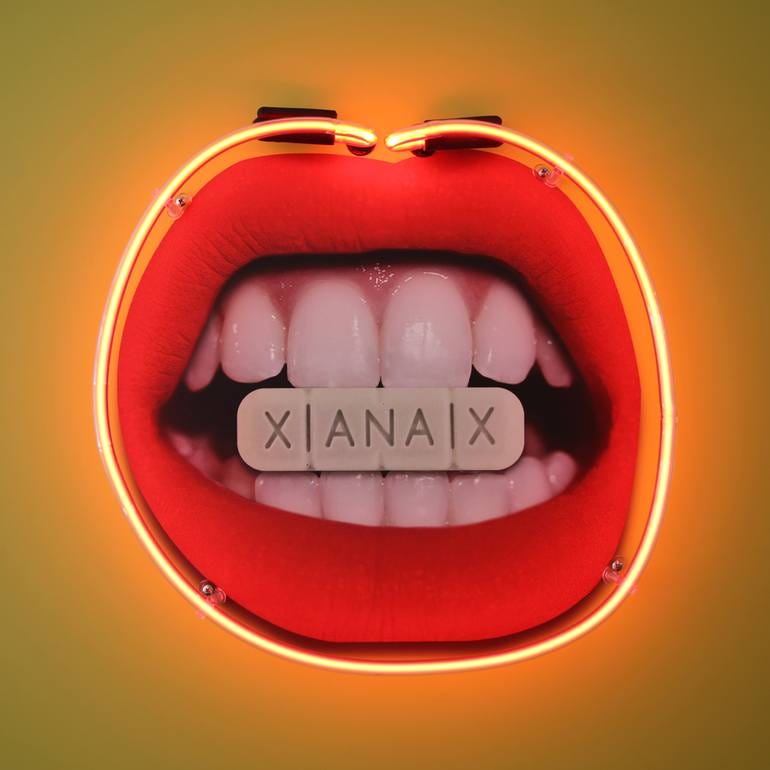
Once I reached the city, I quickly made my way to Lenox Health Greenwich Village Emergency Room. It was nearly 100°F outside, which didn’t help the way I felt. They took my vitals, hooked me up to an IV, and left me lying on a hospital bed for hours. I was finally released and went home with an unsettled mind and a referral to a primary doctor. A few days later, I was crying in her office as she wrote me a Xanax prescription.
Xanax won’t address the root of your problem, but it will provide temporary symptom relief. They say Xanax is addictive, but in my case, it wasn’t. I truly needed it in emergencies to give me a sense of relief. There’s no shame in taking it if you need to.
After my trip to the ER, I started having frequent anxiety attacks. Those are different from panic attacks. Anxiety attacks are milder than panic attacks, which are similar to heart attacks in terms of symptoms. Accidentally, I became somewhat of an expert on this, and here’s what I learned:
Anxiety attacks are often triggered by stress, while panic attacks can happen without warning.
Anxiety attacks usually come on gradually, while panic attacks start suddenly and peak within minutes.
Both anxiety and panic attacks can cause physical symptoms like a racing heart, sweating, and shortness of breath. However, panic attack symptoms are usually more intense.
Symptoms of a panic attack include:
Sudden overwhelming fear or dread.
A sense of unavoidable impending doom.
Dizziness or lightheadedness.
Headache and nausea.
Tingling in hands and feet.
Derealization (a sense of being detached from your surroundings, as though you are viewing your environment through a distorted lens).
A panic attack is typically triggered by emotional stress, while heart attacks are often triggered by physical exertion. Panic attack chest pain is often described as sharp or shooting, while heart attack chest pain is more like pressure or squeezing. Panic attacks can cause tingling, nausea, and sweating, while heart attacks can cause pain that radiates to the arm or jaw and chest pressure that lasts more than 2–3 minutes. If that’s the case, you need to go to the ER immediately.
After constantly working on myself, meditating, doing breathwork, and prioritizing self-care, I noticed that my anxiety attacks subsided significantly. I learned EFT, Emotional Freedom Technique, which turned out to be quite effective for immediate relief. It’s a tapping technique where you tap on each point of your body in the following order:
Tap on the top, center of your head.
Tap on the inside edge of one eyebrow.
Tap next to the outside edge of one eye.
Tap on the bone underneath one eye.
Tap between your nose and upper lip.
Tap between your lower lip and chin.
Tap beneath one collarbone (find the notch beneath the inside edge of the collarbone).
Tap under one armpit (about 10 centimeters/4 inches below the armpit).
But if you want to truly address your anxiety, you need to regularly work with your subconscious to tackle the root cause. Last year, I came across Kabbalah and decided to sign up for a class. I’ve always been spiritual and Kabbalah wasn’t really new to me. I mean… Remember Madonna in the 2000s?
I started studying Kabbalah 1 with David Ghiyam, which you can access here. To my surprise, within a week of attending the class, I realized that my anxiety had fully gone away. Perhaps it was David’s delivery or perhaps it was about time for me to finally surrender and start trusting the Universe. Don’t get me wrong, I still occasionally worry about life and the future, but I haven’t felt anxious in over a year. These principles I learned are so simple yet effective, and they helped me put my mind at ease.
So what it is that I learned?
Principle 1: Pause and Say “What a Pleasure”
When you face a challenging situation, it’s better to be non-reactive.
Step 1: Pause first and observe your reactive nature.
Step 2: Say “ What a pleasure”. This means you are welcoming the experience. Once you decide that everything happens for you, not to you, your mentality will shift to that of “The Creator” mentality - you get to decide to create this life from here.
Step 3: Pray to find the best solution to your problem and believe that you will find it.
Step 4: Be proactive about find that solution.
Principle 2: Have Absolute Trust and Certainty
You need full trust and certainty that everything will work out. You need to believe it, even when it doesn’t feel like it will. Think back 10 years to when the life you live now seemed impossible. What is it that you have no that you thought you’d never have? Create a list of these things and read it out loud. That should give you more trust in moments of doubt. It will remind you that everything is possible and that you will achieve what you desire faster if you are proactive about it. Always keep carrying on and moving forward. And lastly, learn how to surrender and trust yourself and the Universe.
Have you had similar issues with anxiety? What helped you put your mind at ease? Let me know in the comments below.
In retrospect the dots connect.
